
Whether NHS staff are entitled to a free eye test depends on individual circumstances rather than NHS employment alone.
This guide covers the rules for free eye tests in England and Wales, and how NHS staff can find out what support is available to them.
Can NHS staff get a free eye test?
NHS staff are entitled to a free eye test if they meet one of the standard NHS eligibility criteria, which apply to the public generally rather than being specific to healthcare employment. NHS employment alone does not bring automatic entitlement to a free sight test.
Some NHS trusts offer a discounted or free eye test to staff through a separate route, generally tied to regular use of display screen equipment under UK health and safety law rather than NHS employment itself.
United Lincolnshire Hospitals NHS Trust, for example, provides a free eye test through Specsavers for staff who are regular display screen users, with discounted glasses available to those who qualify.
Health Education England has also previously confirmed a policy of providing a free eye test to staff who spend significant periods working with display screen equipment.
Checking with an HR department or line manager is the most reliable way to confirm what support is available locally.
Do NHS staff get free glasses?
NHS staff do not receive free glasses through their employment alone, though some trusts that offer free eye tests will also provide discounted glasses or other financial help where required.
Checking with an HR department or manager is the best way to find out what a specific trust offers.
Is an employer required to pay for an eye test?
Employers are not generally obliged to pay for an eye test outside the display screen equipment entitlement described above.
Anyone who does not qualify for a free NHS eye test, and whose trust does not offer additional support, will need to pay for the test themselves.
Who qualifies for a free NHS eye test?
Anyone living in the UK who meets one of the following criteria is entitled to a free NHS eye test:
- Aged under 16
- Aged 16 to 18 and in full-time education
- Aged 60 or over
- Diagnosed with diabetes or glaucoma
- Aged 40 or over with a parent, sibling or child diagnosed with glaucoma
- Advised by an ophthalmologist to be at risk of glaucoma
- Registered as blind or partially sighted
- Eligible for an NHS complex lens voucher
- A prisoner on leave from prison
- Receiving certain income-related benefits, such as Income Support, income-based Jobseeker’s Allowance, income-related Employment and Support Allowance, Pension Credit Guarantee Credit, or Universal Credit that meets the relevant income threshold
Anyone who does not meet this criteria should contact their NHS employer to check whether a free eye test is offered locally.
What proof is needed for a free eye test?
- A medical card from a local GP
- Proof of date of birth, for those aged 60 or over
- An official letter from a GP confirming eligibility
- A valid NHS tax credit exemption certificate
- Evidence of full-time education, where relevant
The cost of an eye test in the UK
The price of an eye test typically ranges from around £20 to £25, though this can vary by location and provider, and can run higher at some practices.
Larger chains such as Boots, Tesco and Specsavers may offer lower prices than independent opticians due to higher customer volumes, though independent retailers sometimes offer a more personalised appointment.
How long an eye test takes
A straightforward eye test for a younger, healthy person typically takes around 20 minutes. Older patients, or those with conditions such as high blood pressure or diabetes, may need a longer appointment.
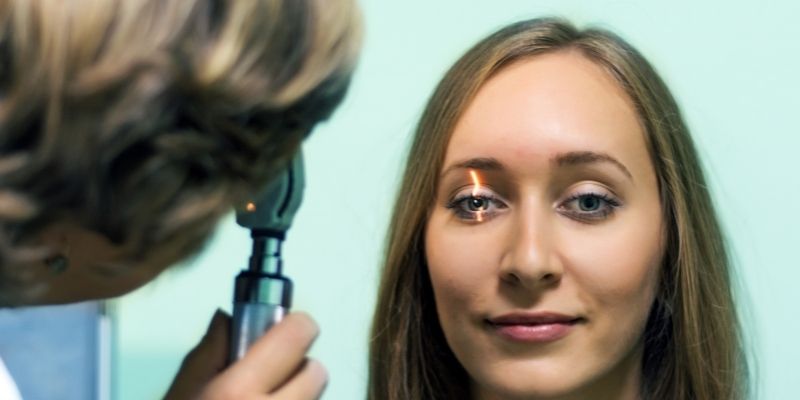
An optometrist will usually ask general questions about health, vision and family history of eye conditions before testing distance and near vision, along with eye movement and coordination, to assess overall eye health.
How often an eye test is needed
The NHS advises that most people have their eyes tested every two years.
Some groups, including children who wear glasses and people with diabetes, are advised to have more frequent tests, since their risk of changes to vision is higher. People aged 70 or over are also generally advised to have more frequent sight tests.
Repairing or replacing glasses on the NHS
Children under 16 are entitled to an NHS optical voucher to help with the cost of repairing or replacing glasses.
Those aged 16 or over are only entitled to this help if they are eligible for an NHS optical voucher and have an illness that caused the loss of or damage to their glasses or contact lenses.
The voucher can be used towards the cost of repairs, replacements or new glasses or contact lenses by taking it to a chosen optician.
Free eye tests at Tesco and other chains
There is no separate free eye test scheme at Tesco beyond the standard NHS eligibility criteria described above.
Specsavers and NHS staff discounts
There is no specific discount for NHS staff at Specsavers. Checking with an HR department is worthwhile in case a local trust benefit applies.
The cost of a Specsavers eye test typically falls within the same £20 to £25 range as other opticians, covering a full eye examination carried out by a qualified optometrist.
Specsavers is not currently running its previous free eye test offer for the general public, though it continues to provide NHS-funded eye tests to anyone who meets the standard NHS eligibility criteria.
Eye tests every two years remain a sensible habit regardless of NHS eligibility, since they help identify changes to vision and eye health early.
Further guides for NHS staff are covered in the blog section of this site.
